Restaurants Once More: Using the 太歲 Ru Gua Method
AI translated from the original Chinese.
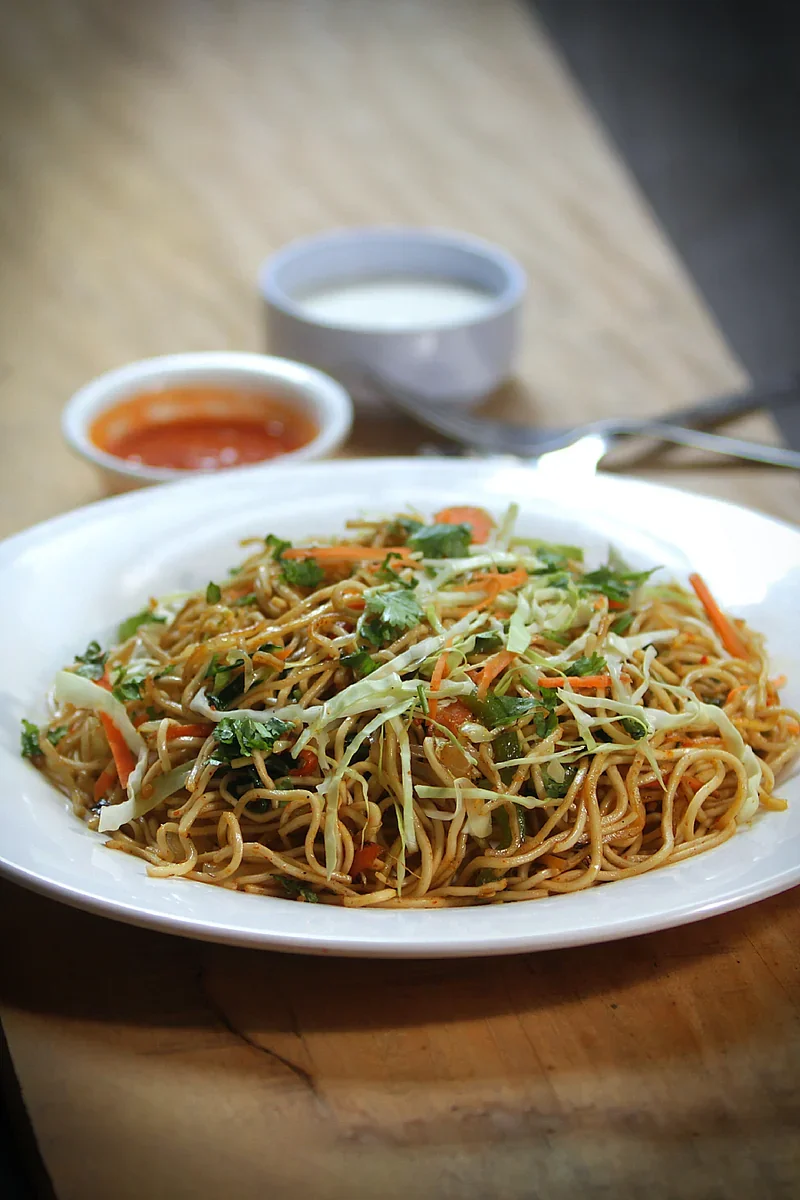
One more article on restaurants, and then I think the restaurant series can rest for a while.
I think back on my on-and-off study of Dou Shu over these 20 years. Besides my career, life has many other things to tend to, so I couldn't spend my days solely researching Dou Shu. Throughout this intermittent study, I read Dou Shu books in my spare time or when the mood struck.
Looking back on this learning journey 20 years later, it was long-winded and inefficient. As a cram-school teacher, in writing handouts and in what I teach orally, I have always held myself to the highest standard of making things "simple yet deep" when passing on exam knowledge.
In terms of my chart, my pattern is "天機 (Tian Ji) and 天梁 (Tian Liang) are good at talking strategy," which in modern language means good at explaining knowledge and theory. Beyond that, 文曲 (Wen Qu) and 化科 strengthen my gift for expression. So what can this gift do? A thought flashed through my mind: could I explain and teach the art of Zi Wei Dou Shu in a simpler way?
The thought arose: could I break the traditional framework of Dou Shu teaching and build a more efficient, yet deeper, way of teaching it? Faintly, something seemed to be taking shape in my head, but it's not yet clear...
That said, the most traditional way to improve at Dou Shu is still to go over the same or similar cases many times. Once we find the common patterns among them, our skill naturally improves. That's why I've posted so many restaurant articles in a row.
So, to today's topic: what kind of restaurant will we discuss?
Suppose a subject isn't in the restaurant business, but a close relative has opened a restaurant, and the subject wants to know whether the relative's restaurant is profitable. How do we read it?
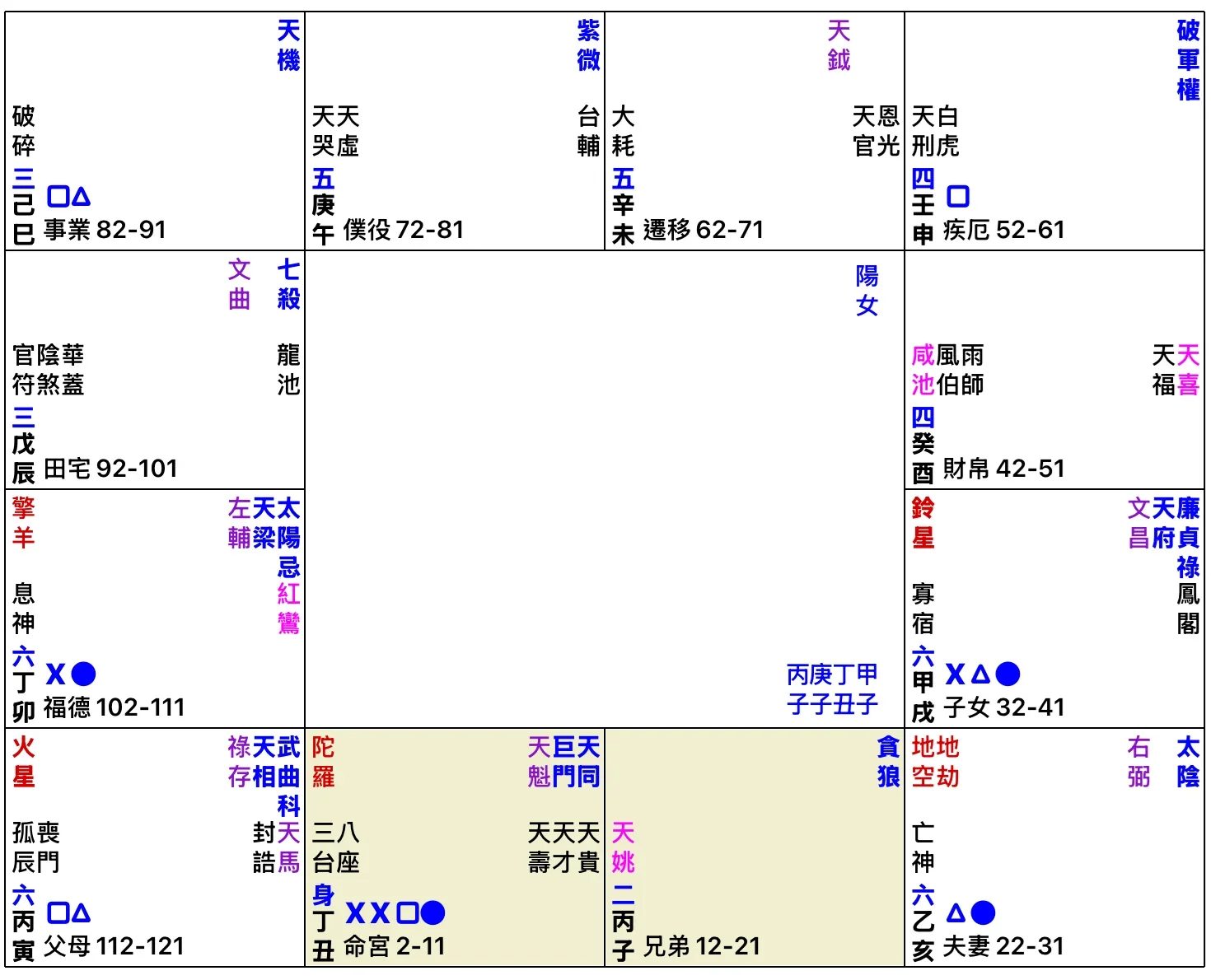
The subject's original chart:
The subject's relative was born in a 戊午 year. How will the restaurant they opened do? Let's bring in the relative's 戊午 data and transform the chart:
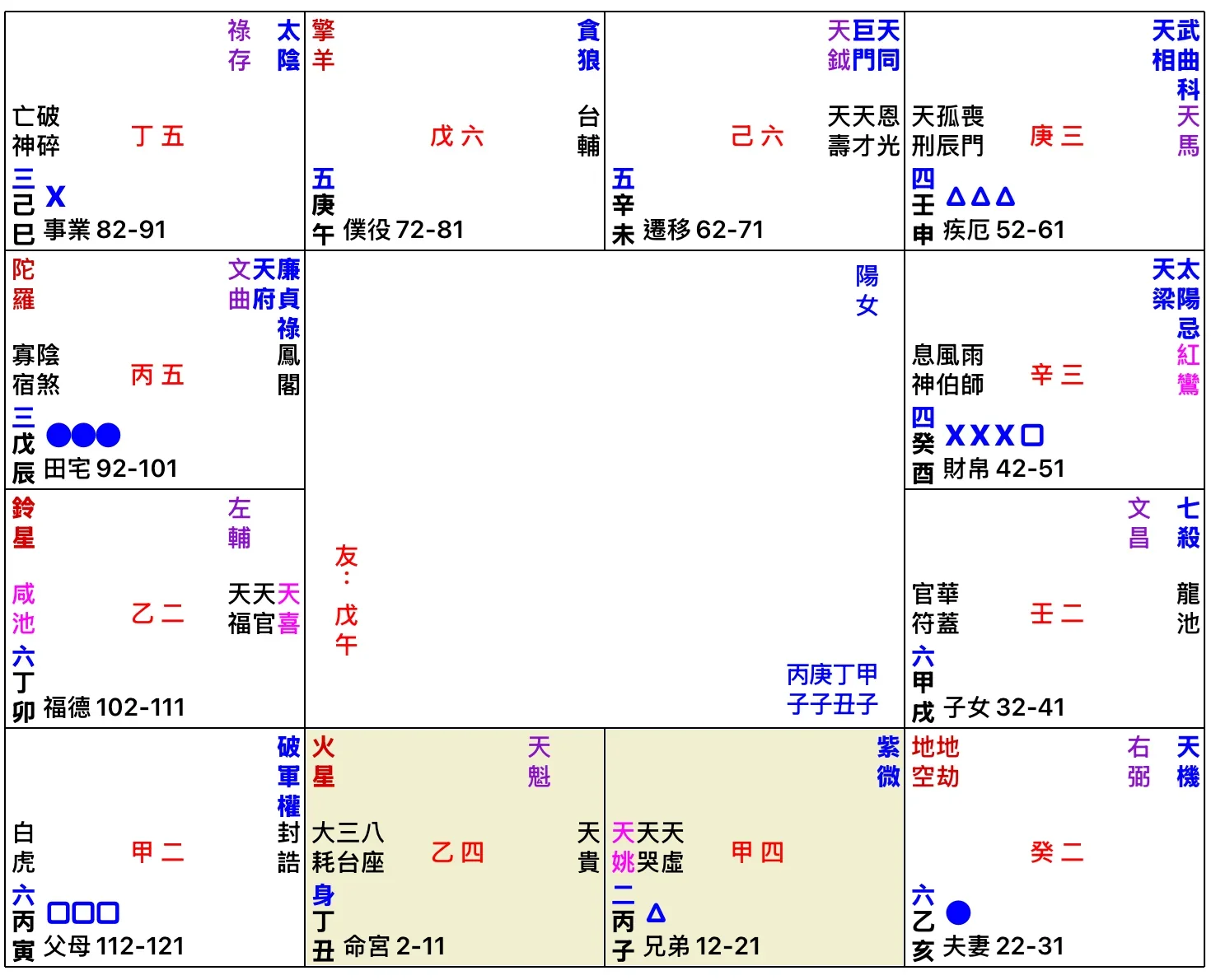
We already know this person born in 戊午 has opened a restaurant, so let's look straight at 天相 (Tian Xiang).
天相 in 申, stem 庚 (with its three sides and four directions: 丙辰, 甲子, 甲寅)
- 申: Lu (●), Quan (□) and Ke (△) concentrated in 申, seeing 武曲 (Wu Qu) and 天相; 天相 in particular sees 3 化科. For a restaurant, its fame spreads far.
- 辰: Lu concentrated in 辰, the Wealth Palace of 申, seeing 廉貞 (Lian Zhen) and 天府 (Tian Fu), both lords of career; 天府, a wealth star, is influenced by Lu stars, which is excellent.
- 寅: Quan concentrated in 寅, which can mean starting a business; combined with 天相 in 申, it's the image of opening a restaurant.
- 申: 天馬 (Tian Ma) in 申; customers come and go quickly, high table turnover.
- 辰: 陀羅 (Tuo Luo) in 辰; street food.
- The person born in 戊午: main star 紫微 (Zi Wei), stem 甲, making 廉貞 化祿, 破軍 (Po Jun) 化權 and 武曲 化科, again auspiciously transforming 天相 in 申
- 申, 子, 辰 + 寅: the only auspicious star is 文曲; few menu items, fairly narrow.
Overall judgment: the restaurant is street food with a narrow menu, very high table turnover, generous income, and a famous name.
- Subject: How is the restaurant my relative opened?
- Me: It should be a street-food place, but very well known with lots of customers. It must be a famous spot, right?
- Subject: Yes, it's a stir-fry restaurant, with a constant stream of customers. It didn't take long from opening to becoming famous.
- Me: Though it's a stir-fry place, the menu doesn't seem to have many items.
- Subject: Right, what we sell is fairly limited.
- Me: May I ask how profitable it is?
- Subject: Over these few years, it's probably earned a house already.
- Me: I'd really like to eat at this stir-fry place sometime.
With this article, I've discussed four restaurant charts in a row. Anyone interested in Dou Shu should now deeply appreciate how much 天相 does in opening a restaurant. But restaurants differ: Chinese and Western, high-end and street, fast food and slow food... Besides observing 天相, the arrangement of the minor stars, and even the lesser stars, shapes what kind of restaurant it will be. If fellow enthusiasts have restaurant cases of their own, try following the same approach and keep your eyes on 天相; I'm sure you'll gain some insight.